
Smart lighting for energy savings is one of the most practical upgrades you can make to your home. With rising electricity costs and growing demand for comfort and convenience, energy-efficient smart lighting combines function, style, and savings. In this 2025 guide, you’ll learn how to integrate smart lighting into your home to cut costs and enhance your living space.
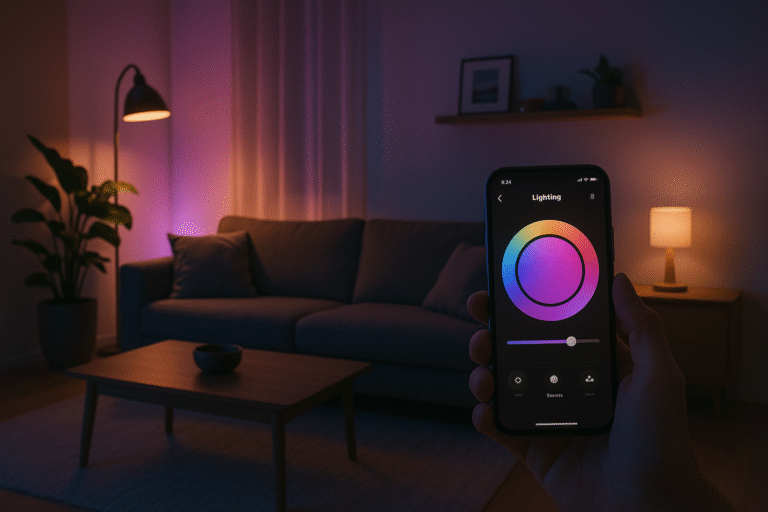
Why Smart Lighting Is Worth the Switch
Smart lighting systems offer a range of benefits, including:
- Lower Energy Bills: LED-based smart bulbs consume up to 75% less energy than incandescents.
- Automation and Scheduling: Program lights to follow your daily routine or sunset/sunrise times.
- Remote Control: Turn lights on or off using your smartphone from anywhere.
- Ambiance and Color Control: Adjust color temperatures to suit your mood or activity.
According to the U.S. Department of Energy, LED lighting alone can save the average household up to $225 annually. Add smart automation, and you’re maximizing both savings and comfort.
Top Smart Bulbs for Energy Efficiency in 2025
Looking for smart lighting for energy savings? Start with these standout smart bulbs:
- Philips Hue – High compatibility, preset scenes, energy-efficient, and perfect for whole-home setups.
- Wyze Bulb Color – Affordable and vibrant, ideal for experimenting with scenes and automation.
- TP-Link Kasa Smart Bulbs – Budget-friendly with app control and no hub required.
- LIFX – Premium features like deeper color control and low standby power draw.
How to Maximize Energy Savings with Smart Lighting
Here’s how to optimize your setup:
- Start in High-Use Areas: Kitchen, hallway, and living room.
- Create Custom Schedules: Automate based on time of day or occupancy.
- Use Motion Sensors: Turn lights on when entering and off when leaving.
- Group Lights: Control whole zones at once to reduce wasted usage.
- Monitor Usage: Some systems let you track energy consumption per bulb.
Smart Lighting Room-by-Room
- Living Room: Dim the lights for movie nights or brighten for reading.
- Kitchen: Automate task lighting for meal prep hours.
- Bedrooms: Use warm tones and gentle wake-up routines.
- Bathrooms: Motion sensors for nighttime visibility.
- Garage & Entryway: Set automation for when doors open or you arrive home.
Design Ideas: Blending Style with Smart Function
Smart lighting doesn’t just save energy — it enhances aesthetics:
- Accent with Color: Add personality to home offices, gaming rooms, or kitchens.
- Highlight Decor: Use spotlights to draw attention to artwork or bookshelves.
- Layer Your Lighting: Combine overhead fixtures, floor lamps, and LED strips for depth.
Controlling Smart Lighting: Apps, Voice, and Automation
Choose your preferred method:
- Apps: Great for mobile control and detailed scheduling.
- Voice Assistants: Use Alexa, Siri, or Google to adjust lights hands-free.
- Smart Hubs: Centralize control with devices like SmartThings or Apple HomeKit.
Common Pitfalls to Avoid
- Ignoring Compatibility: Ensure your chosen bulb works with your smart platform.
- Over-Automation: Too many routines can become a headache.
- Neglecting Updates: Keep apps and devices updated for security and performance.
Conclusion
Smart lighting for energy savings delivers both immediate and long-term benefits. It’s an entry-level upgrade with high impact — saving you money while modernizing your space. Whether you’re using voice control, sensors, or custom scenes, you’re only a few bulbs away from a smarter, more efficient home.
Key Takeaways
- Smart lighting reduces energy costs by using efficient LEDs and automation.
- Scheduling and motion sensors prevent wasted energy and boost convenience.
- Room-by-room customization lets you tailor lighting to your lifestyle and design needs.
- Start with high-use areas and expand with scenes, groups, and voice control.
- Always check platform compatibility before purchasing new bulbs or switches.
- Combine smart lighting with other energy-saving tools like smart thermostats and plugs for even greater savings.
Smart lighting for energy savings isn’t just a tech upgrade — it’s a lifestyle shift toward smarter, more sustainable living.
Read Next:
- Best Attic Insulation for Hot Climates (2025 Guide)
- Affordable Home Energy Efficiency Upgrades Under $100
- Top 10 Energy-Saving Habits